

Hybrids and Viniferas: A Key Alliance Shaping the History of Our Local Wines
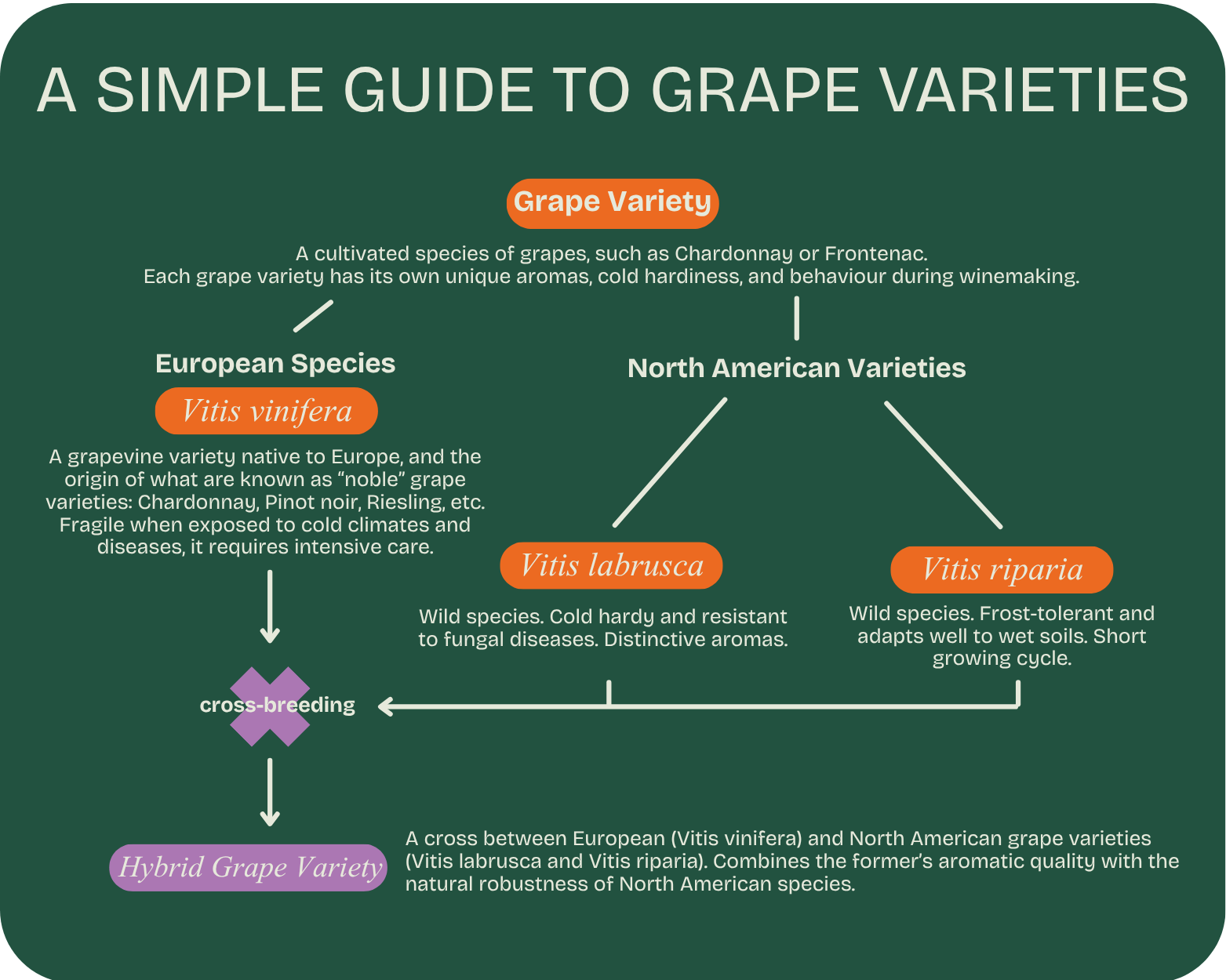
As the title suggests, this article explores hybrid grape varieties and Vitis vinifera—terms unique to the world of winemaking. Before we dive in, here’s a simple lexical guide to help you follow along.
By Laurence-Michèle Dufour
When we compare Vitis vinifera and hybrids, the word “nobility” quickly enters the conversation to highlight the quality attributed to vinifera varieties. After all, the world’s greatest wines are made with these grapes. An entire system of globally recognized competitions and appellations is built around these vinifera grapes, allowing wine lovers, producers, and professionals alike to rely on a common language within this vast wine universe. Consequently, hybrids, which exhibit different aromatic profiles typical of our northern climate, have traditionally been overlooked.
The first courageous pioneers to plant grapevines in Québec in the 1980s right away opted for hybrid grape varieties known to endure difficult weather conditions as well as being resistant to fungal diseases. In fact, they felt they had no other choice. It seemed unfathomable that these fragile, European viniferas (Chardonnay, Pinot Noir, Riesling and other so-called noble varieties) could survive our harsh winters. Then, 20 years ago, with the invention of geotextile blankets, winemakers were able to expand their horizons while multiplying the possibilities.
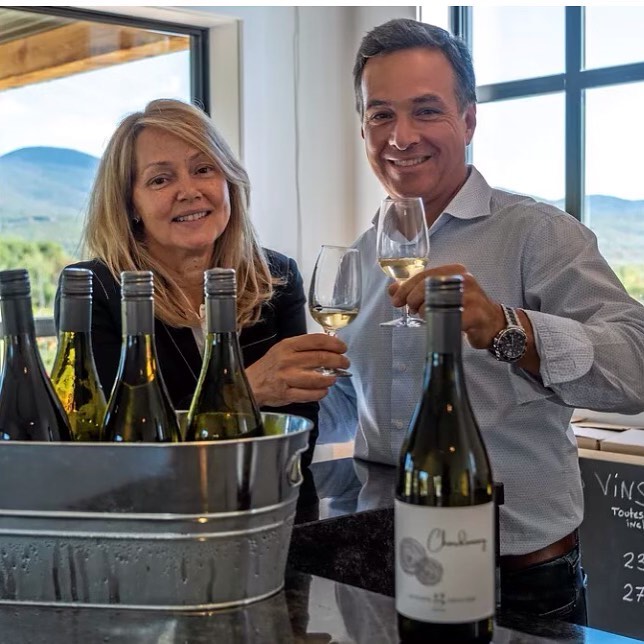
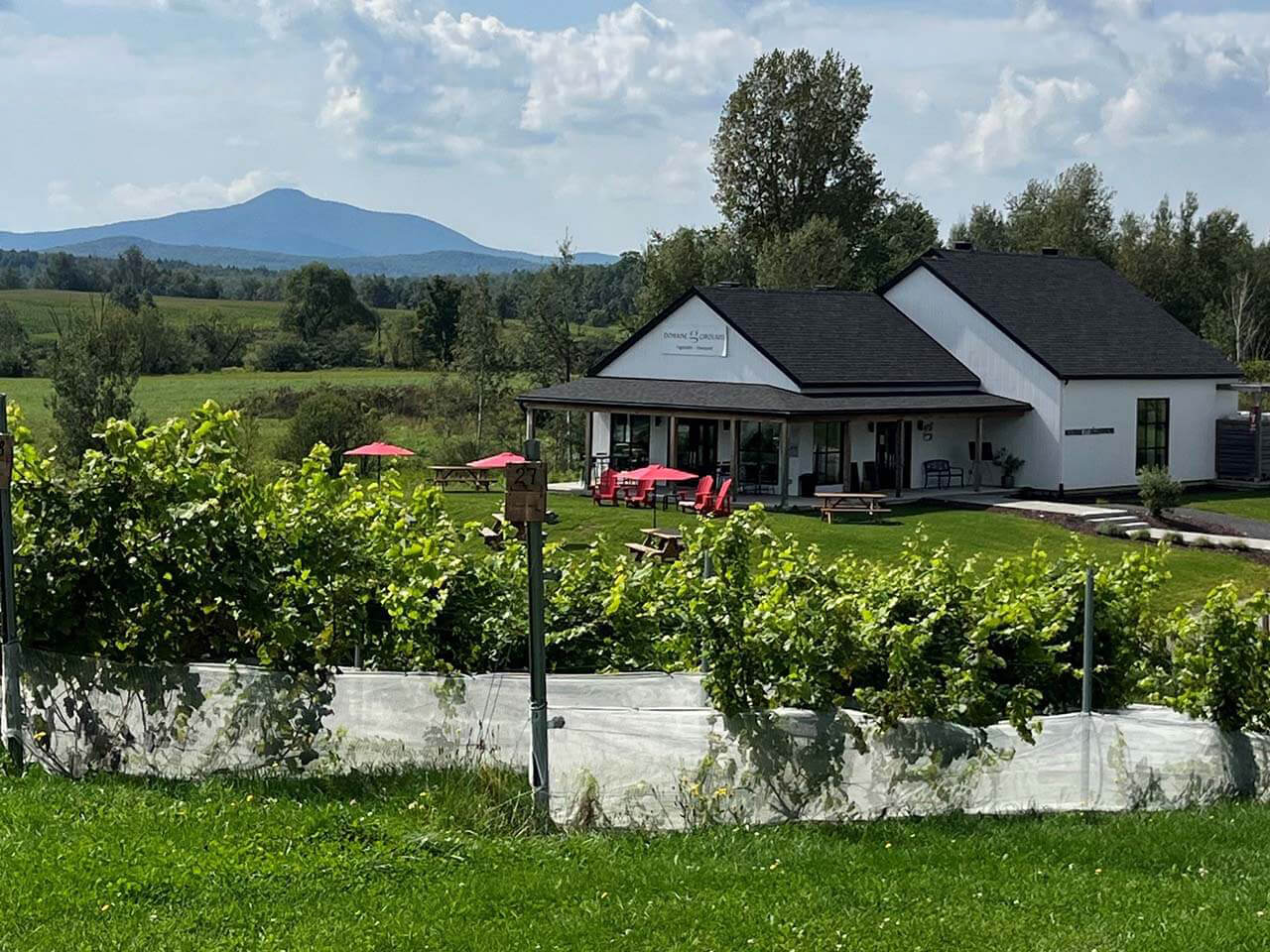
When Josée Tremblay and her husband Martin Girouard of Domaine Girouard in Sutton decided to embark on this great adventure in 2016, these wine enthusiasts dreamed of producing chardonnay, pinot noir and Cabernet Franc. Their vineyard is made up of 70% vinifera grapevines, including a few Nebbiolo and Sangiovese varieties, a nod to Martin’s Italian roots, which have begun to yield their first grapes.
The agronomist who was testing the land to evaluate its potential for planting a vineyard said we were out of our minds, “You’re throwing your money out the window.” He scared us a bit, so we told ourselves we would plant a few hybrids as well.
– Josée Tremblay
Hybridization : An Answer to Past Crises
Although we might think that hybrid grape varieties are a recent invention, the first research on this subject goes back to the 19th century. This process can occur quite naturally and is based on cross-pollination between the European Vitis vinifera species and North American varieties, such as Vitis labrusca or Vitis riparia, which stand out for their tolerance to cold weather and disease resistance.
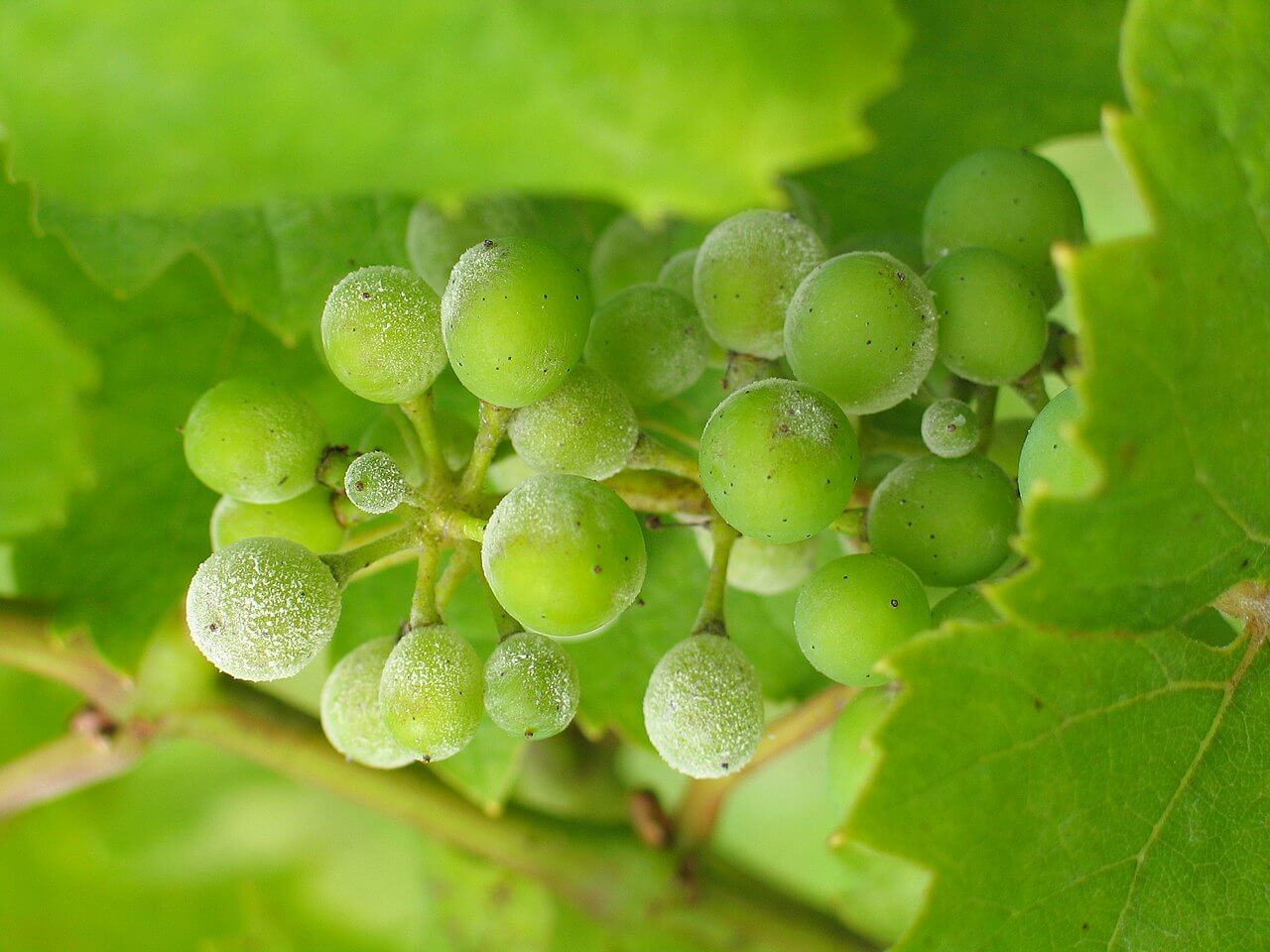
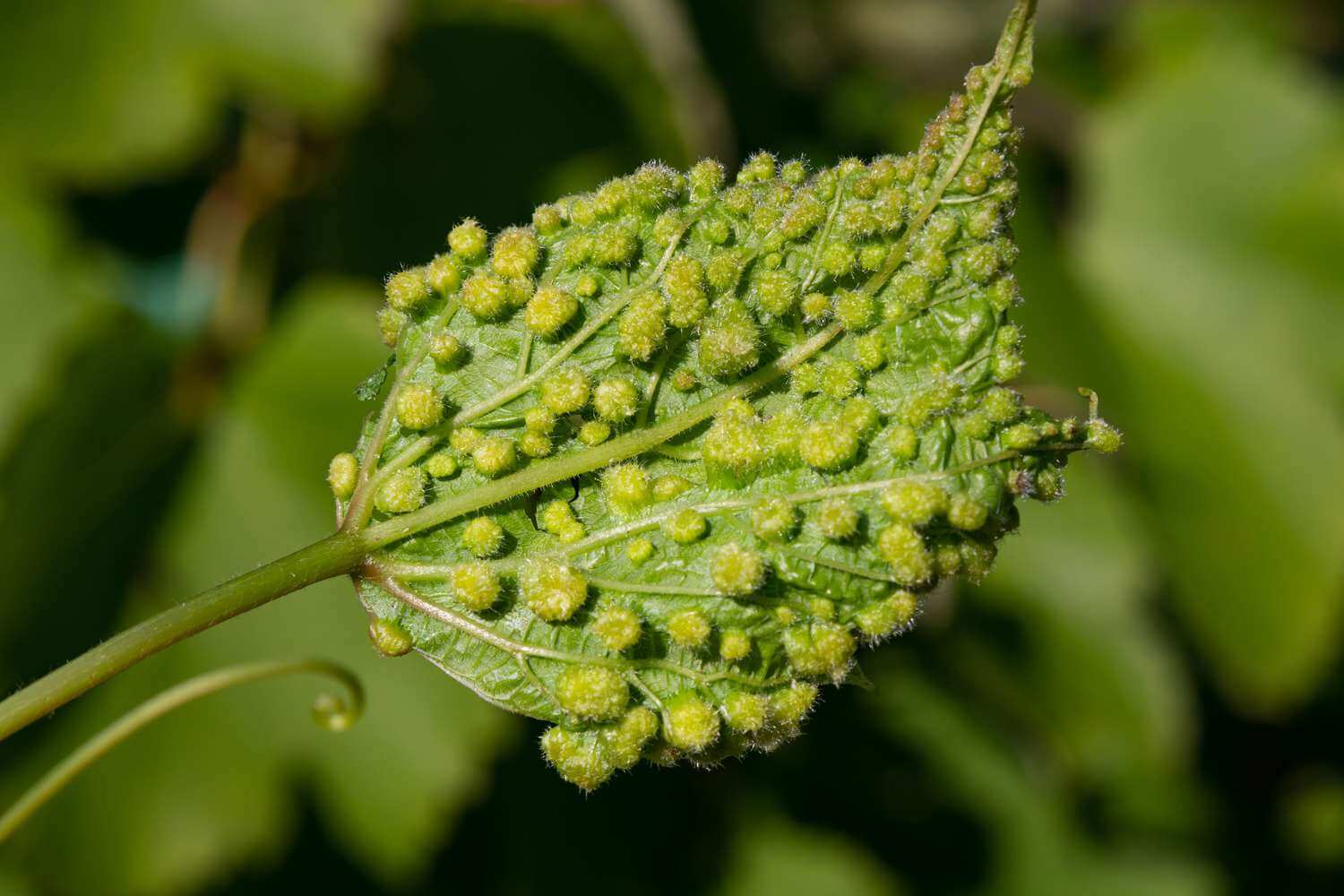
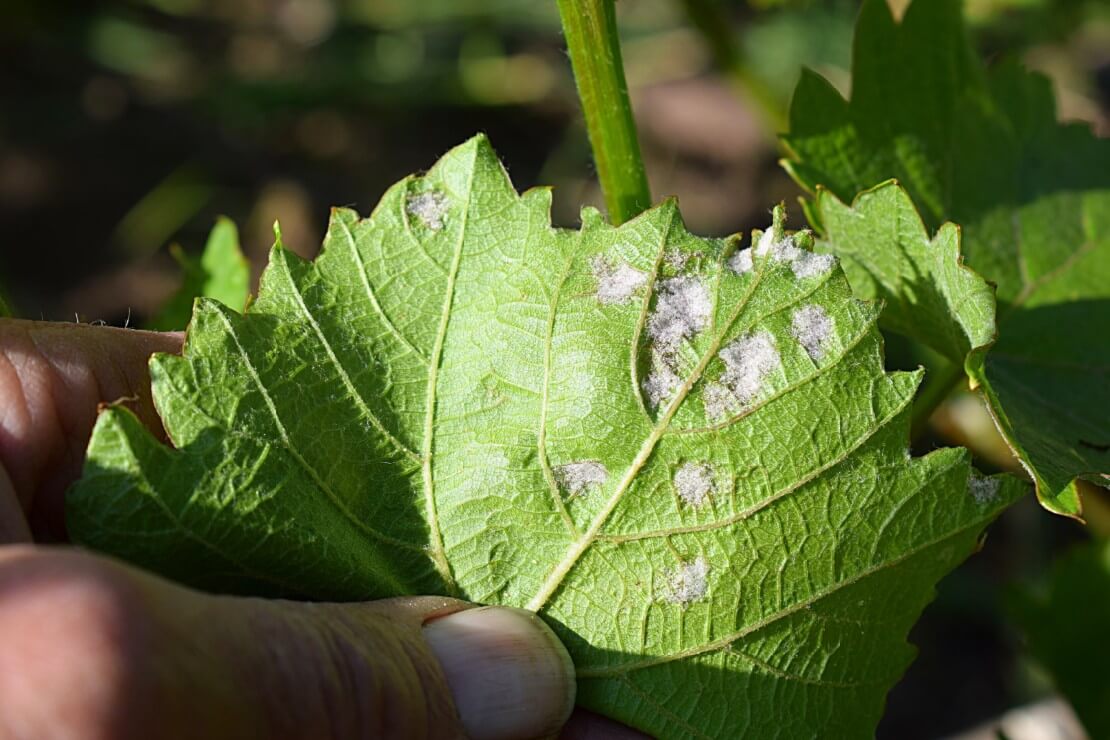
This scientific approach became essential following the import of American grapevines into Europe in the early 1800s. The latter introduced pathogens such as powdery mildew, downy mildew (fungi), and phylloxera (an insect), which decimated vineyards across the Old Continent. So, in order to save the viticulture industry, they crossed the well-established European varieties with the robust American species, thus creating hybrids able to survive these devastations while serving as resistant rootstocks.
The Cost of Nobility
In the mid-20th century, the chemical industry developed a wide range of pesticides and fungicides. This new arsenal allowed winemakers to resume cultivating their traditional European varieties, in spite of their frailties. The result: hybrids fell back into disuse and were even sometimes banned in favour of these iconic grape varieties.
“Along with the arrival of pesticides and fungicides, chemical fertilizers were also introduced, which supplied plants with artificial nutrients. The vines were literally showered with these artificial nutrients for years. However, they lacked soil depth and resilience, thereby creating stressed plants that were increasingly susceptible to disease,” explains Simon Naud of Vignoble de la Bauge. For someone actively involved in the study of regenerative viticulture, such a persistent approach makes no sense, and he deplores this stubborn insistence on limiting choices to a handful of European grape varieties.
In the end, we find ourselves with plants that have been multiplied millions of times, starting with the same cutting. We’re left with an almost annihilated biodiversity because we opted for this monoculture approach, eliminating any other plants that could grow in the same space.
– Simon naud
With his expertise and some 30 years of experience in winemaking at the vineyard established by his father 40 years ago, this winemaker now advocates maintaining a ratio of 20% of protected vines and 80% that have been adapted to our climate. According to him, combining viniferas and hybrids reassures his customers and facilitates our palate’s understanding of his wines, more accustomed to classic aromas.
 Simon Naud
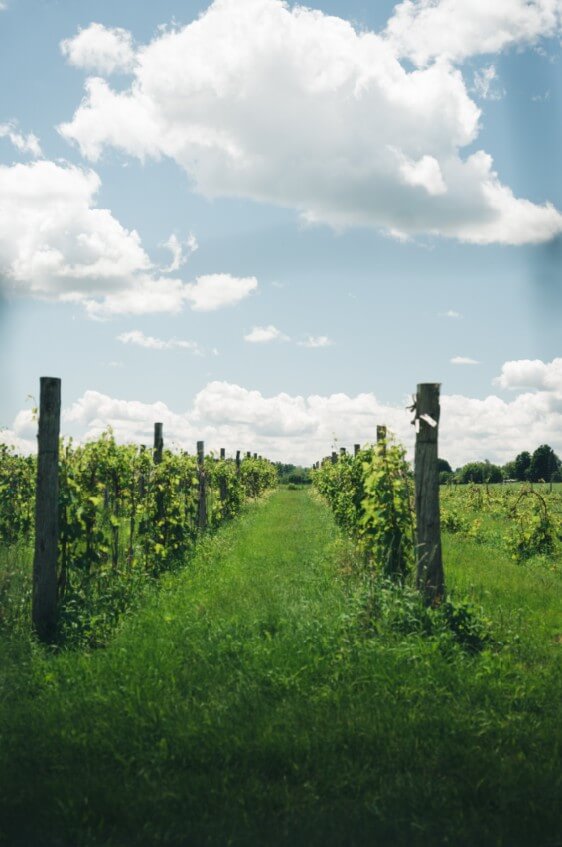
 Row of vines at Vignoble de la Bauge
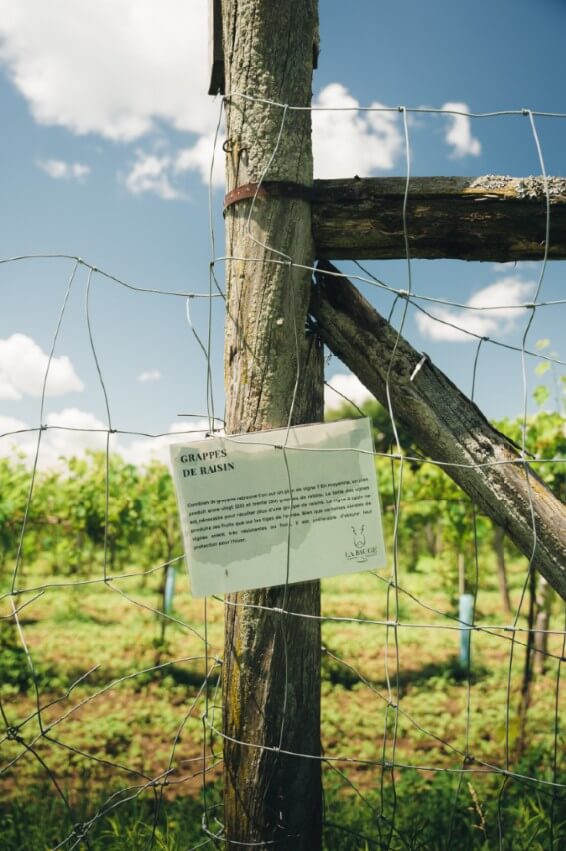
 Information Panels at the Vineyard
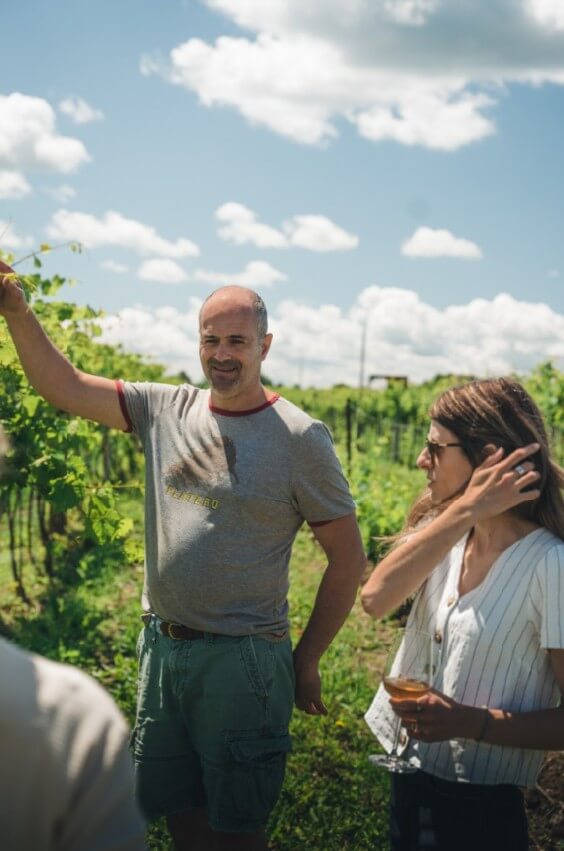
Josée Tremblay doesn’t regret planting her hybrid vines, offering her hours of pleasure in the wine cellar. Her favourite? The Frontenac Blanc, a go-to variety for her blends, which found its way into her amphoras (terracotta jars), since she had no more room in her stainless-steel vats. “It spent eight months here, and when we tasted the wine, we experienced a true WOW moment. We now found ourselves in a totally new place! Throughout its maturation, the wine loses a lot of its acidity, while introducing more smoothness and a velvety texture. I might prepare an entire cuvée just using Frontenac Blanc grapes aged in amphoras.”
A Strong Comeback for Hybrids
Throughout the 1950s, vineyards experienced a game-changing period once again. German and Swiss researchers perfected hybridization methods to create grape varieties with a quality comparable to viniferas. This is how they came up with the PIWI concept (from the German Pilzwiderstandsfähig, fungus-resistant). These varieties, which regained popular favour in the 1990s because of their ecological virtues, demonstrate that the future of wine could reside in these hybrids, shunned in earlier times.
As in Québec, more and more winemakers from all around the world have been researching the matter and testing the potential that these hybrids offer under all kinds of conditions in order to establish a more sustainable viticulture. The winemaking landscape is still evolving greatly and we’re bound to have more heated debates about grape varieties throughout the industry, but a clear trend for the future definitely lies in grape diversity.