

Overcoming Québec’s Climate: Techniques for Overwintering and Managing Spring Frost
By Laurence-Michèle Dufour
In Quebec, cultivating grapes is an extreme sport. And although our bitterly cold winters pose a threat to their survival, the wine industry continues to experience phenomenal growth. While some hardier grape varieties can withstand winter frosts down to -35 degrees Celsius, the vast majority are at risk as soon as the thermometer drops to -20 degrees Celsius. When vintners choose to plant vines in such a hostile climate, they know they’ll have to come to terms with this reality.
To protect more vulnerable varieties, the two main techniques that have proven effective are hilling up and using geotextile covers. In both cases, snow is a key ally in providing additional insulation.
Hilling Up
At the Val Caudalies vineyard in Dunham, Guillaume Leroux, a devoted fan of the Vidal variety, doesn’t use geotextile covers. When he planted his first vines 20 years ago, this technique was still in its earliest stages. Hilling up, which involves covering the base of the vine with earth in the autumn to protect the shoots and the vine stocks, became the method of choice. “We borrowed the hilling machine from L’Orpailleur to copy it and recreate the same tool. It’s not something you can buy off the shelf; you have to have it all made to order,” explains Guillaume. Québec winemakers have long had to be creative in developing tools suited to their circumstances.
According to him, his vineyard’s very sandy soil is ideally suited to this method: ‘We’ve seen very clayey soils where, when you build up the soil around the vines, it’s like rolls of plasticine – it doesn’t work; you can’t cover the vines properly.’ The varieties that his partners and he have chosen to plant (including Vidal, which accounts for 75% of their production) thrive when buried beneath the soil.
Guillaume points out, however, that certain more delicate grape varieties could suffer from hill mounding. With the introduction of geotextile fabrics into Quebec’s vineyard landscape, it became possible to grow grape varieties less suited to our climate, such as the famous Vitis vinifera. The winemaker considered making the switch, but the exorbitant costs involved in transitioning to this method do not seem worth the effort for him.
Geotextile Covers
When André Pollender of the Vignoble du PicBois in Brigham began planting vines on his maple grove in 2019, the wine scene in Québec had already changed significantly. He was able to draw on the experience of his fellow winemakers, whose progress has been spectacular over the past few decades. His numerous trips to Europe to promote his sugar shack’s maple syrup have also helped shape his career path.
Passionate about Syrah grapes, he decided to take a bold step and was one of the pioneers who dared to plant this variety here. “We decided to go all out to develop the wines we wanted to create. We knew which grapes we wanted. Therefore, we carried out our trials with more fragile varieties, which held up very well,” says the winemaker, clearly thrilled to have overcome this challenge. When designing his vineyard, every effort was made to facilitate the installation of geotextile coverings, a process requiring time, labour, equipment and storage space.

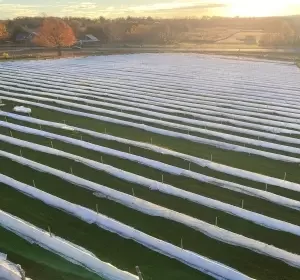
Rows under geotextile at Vignoble du PicBoic
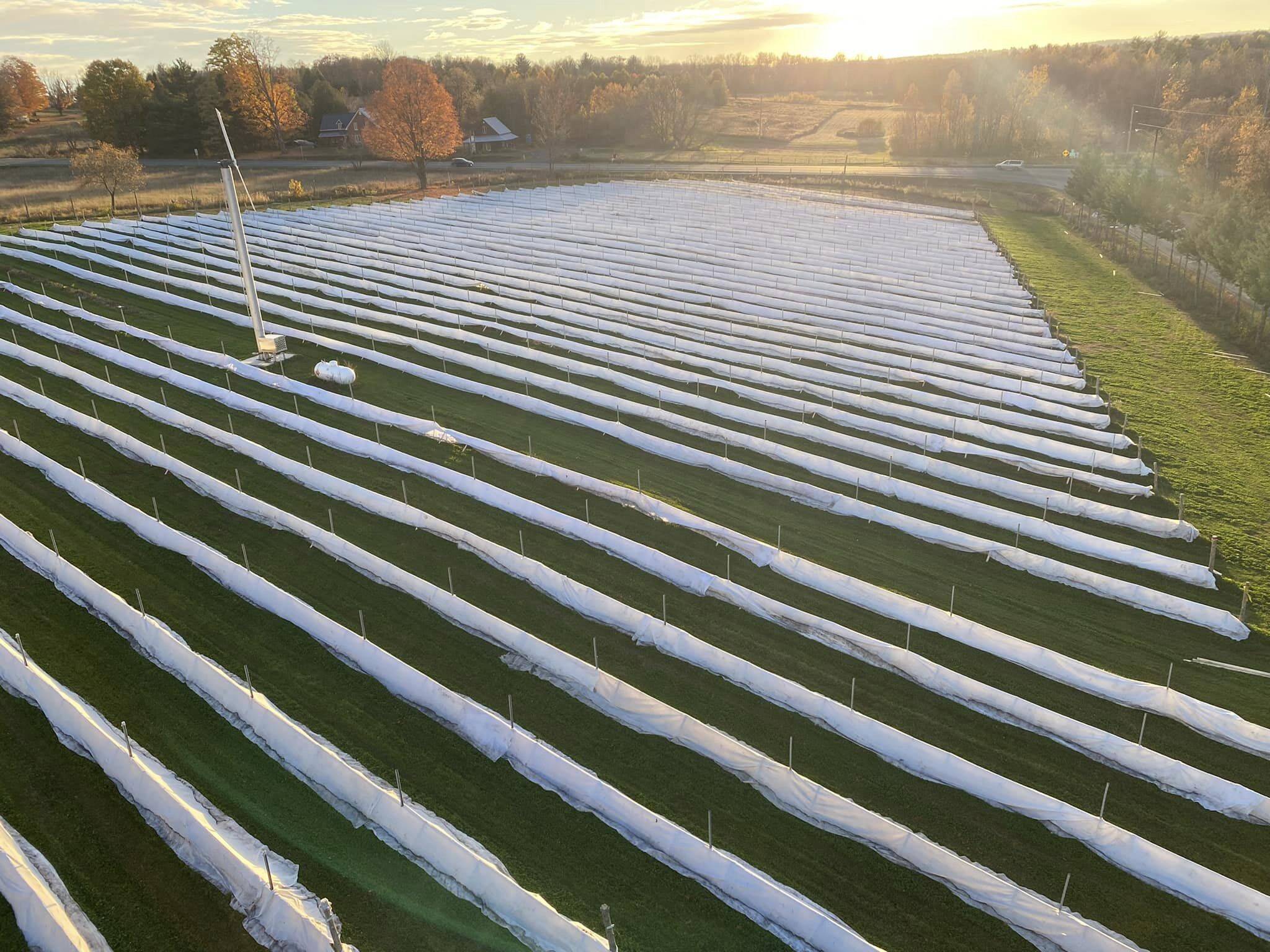
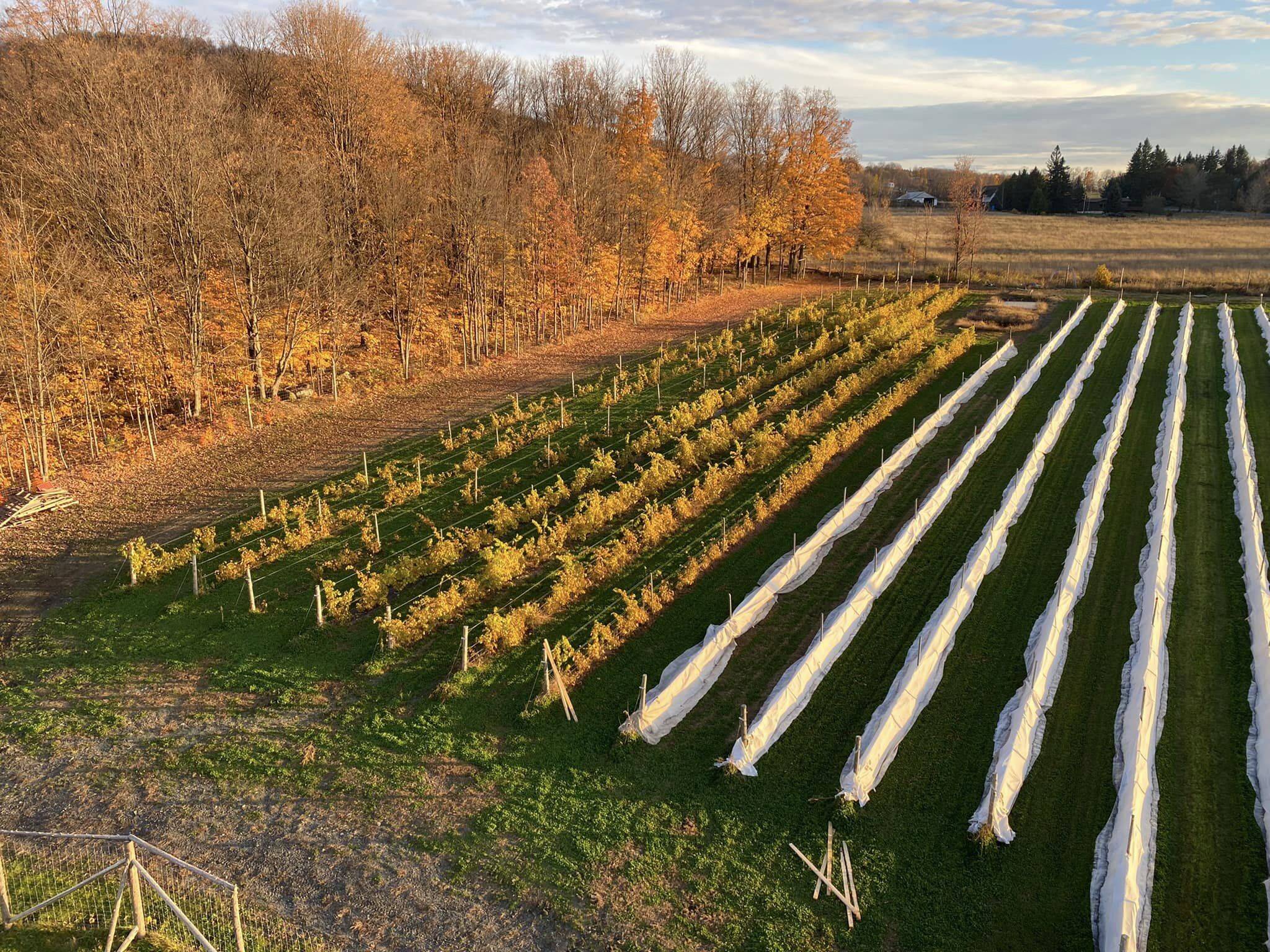
We roll out around 22 kilometres of canvas in the autumn, then roll it back up in the spring
André Pollender, Vignoble du Picbois
In autumn, once the grapes have been harvested and the leaves have fallen, an initial pruning is carried out to cut the vines back to a height that allows this specially adapted cover to be installed. Hybrid and vinifera varieties benefit from this protection, while a few rows of hardier, rustic varieties spend the winter uncovered. “We roll out about 22 kilometres of canvas in the autumn, then roll it back up it in the spring. But Syrah, as it is very delicate, benefits from a double protection: two layers of geotextile with an air gap between them,” he explains. These famous covers are made of synthetic fibres. They are used to cover the entire vine, allowing snow to form a small mound on top. The ground thus warms the interior of this little igloo, where the temperature can rise by a good ten degrees, thereby protecting the vine and its buds.
A Special Winter
This year the first snow fell earlier than usual in November and surprised us all. «For the first time in twenty years, we had to do something I never imagined doing. Because we received 20 centimeters of snow, we had to take the snowblower out onto five hectares of vines.” Exclaimed Guillaume Leroux. Like many other winemakers, he waited for this first snow to melt since it interfered with the hilling process as well as with laying out our geotextile covers. “Then, another 20 centimetres of snow fell on top of that! We had to take some pretty drastic measures.” He now swears he’ll do everything in his power to make sure he never gets caught off guard like that again.

butage sous la neige au Vignoble val Caudali 
Hilling up under the snow at Val Caudalies 
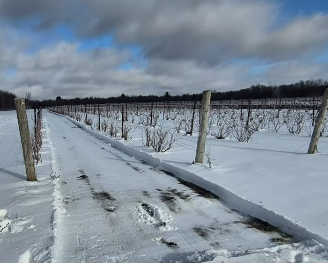
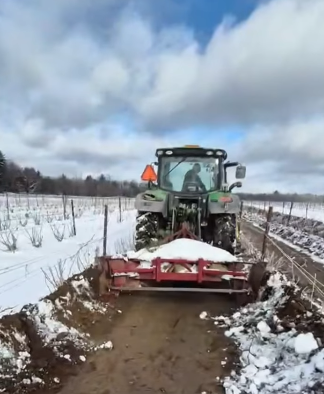
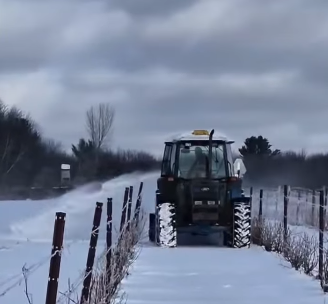
For the first time in 20 years (…) we had to take the snow blower out onto 5 hectares of vines.
Guillaume Leroux, vignoble val caudalies
Till April’s Dead, Change not a Thread!
Despite this early winter, the arrival of spring marks the start of a real rush for Québec winemakers. Over the upcoming weeks, they will need to find the right moment to clear their plantations, a crucial step in this year’s production.
“As soon as the last frost has passed – at around -10 degrees Celsius – the covers can be removed. We all agree that, depending on the year, there’s always a risk here in the region right up until April 15. With the first few fairly warm days, the buds develop rapidly, and if there are late frosts, we run the risk of problems,” explains André Pollender. So, caught between the greenhouse effect and the risk of spring frost, winemakers will have to tread carefully to find the ideal moment to remove the protective coverings. Frost can be fatal for the buds, which carry the future harvest.
To counter the effects of these spring frosts, which can strike with barely a moment’s notice, some vineyards have installed wind towers. These towers draw in the warmer air from around twenty metres above ground level and channel it down towards the ground, thereby gaining the few degrees needed to protect the vines. Although expensive, these towers ensure a more peaceful night’s sleep for their owners. But during historic frosts, such as the one we experienced in May 2023, when the temperature dropped to -6 degrees Celsius, those few extra degrees aren’t enough. “Normally, frost sets in between 4 and 6 o’clock in the morning, but this time, it started freezing as early as 9 p.m. We turned on the wind towers, but we quickly realized that it wouldn’t be enough. So we got to work and had to light 300 fires during the night,” explains André Pollender. He will long remember this epic night spent on his tractor, while friends, family and neighbours came to lend a hand.
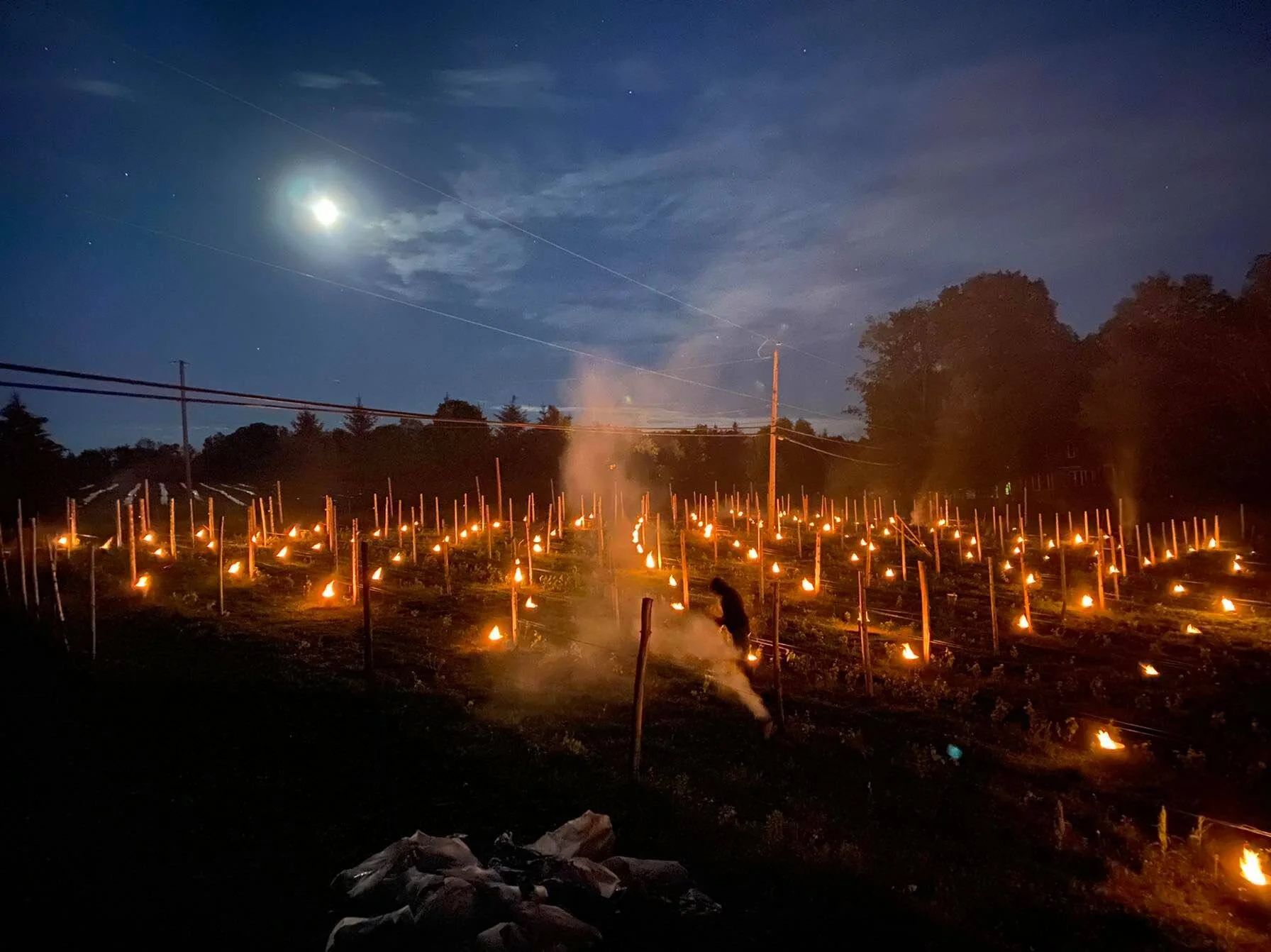
Fires at the Picbois vineyard during a spring frost
Despite the costs and anxieties caused by these climatic uncertainties, the window between the last spring frost and the first autumn frost continues to lengthen, heralding a promising future for Québec’s wine-growing landscape. Our winemakers have the wind in their sails, but although they are well organized, resilient and proactive, they remain at the mercy of Mother Nature, who, in the end, will always have the final say.
Next time you raise a glass, spare a thought for the 22 kilometres of canvases that have been rolled out (and rolled back up), the fires lit in the dead of night, and the soil carefully mounded in the autumn. To meet the artisans behind it all, head to the Vignoble Val Caudalies and the Vignoble PicBois!